
Step 1
Targeted to one level
Traction pulls the whole spine. Decompression isolates a level. Your exam and digital X-rays identify which disc is involved, and the table is set to that segment.
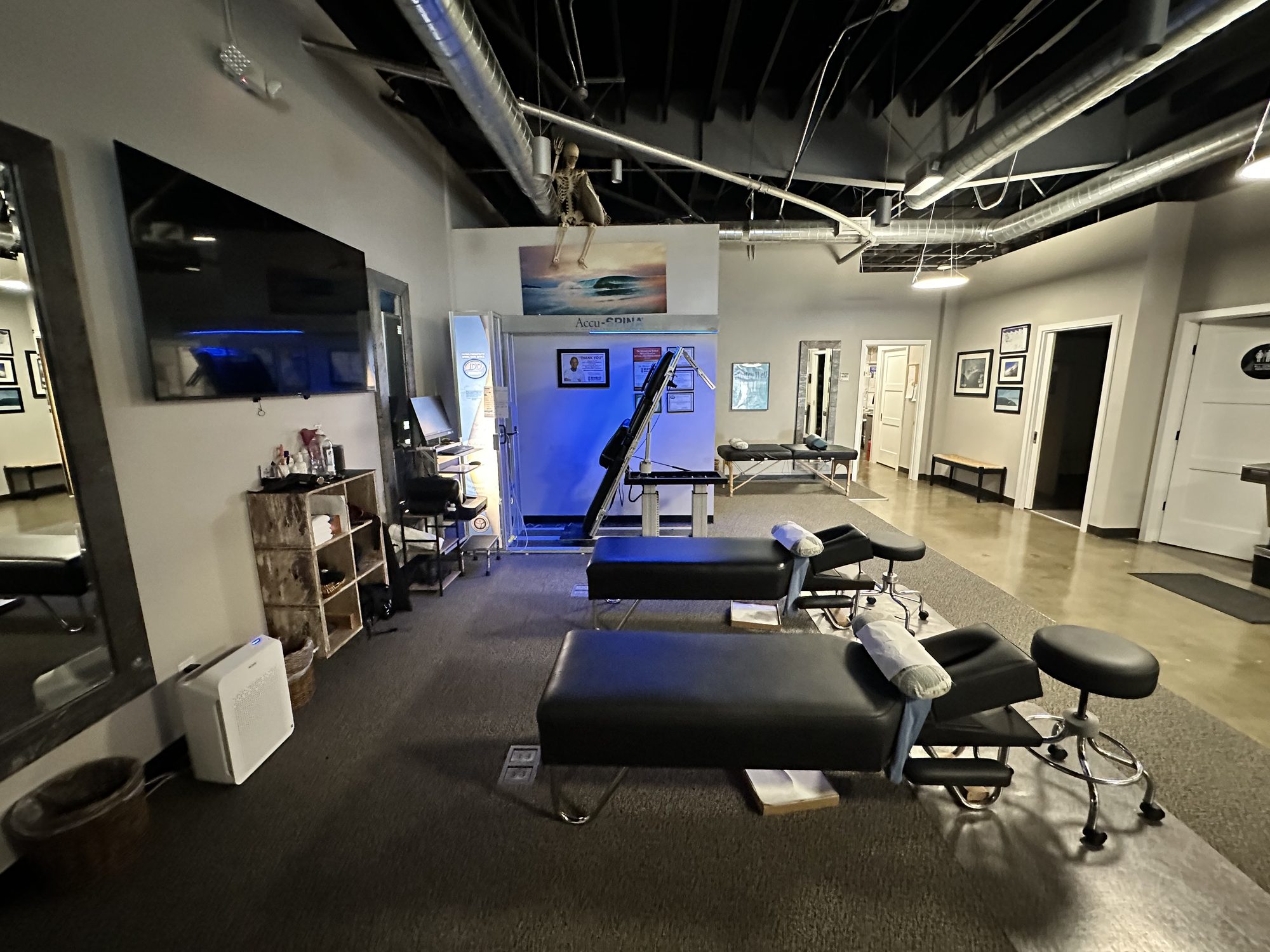
Computer-directed decompression that isolates the injured disc, lowers the pressure inside it, and gives it what it needs to heal - space, fluid, and time.
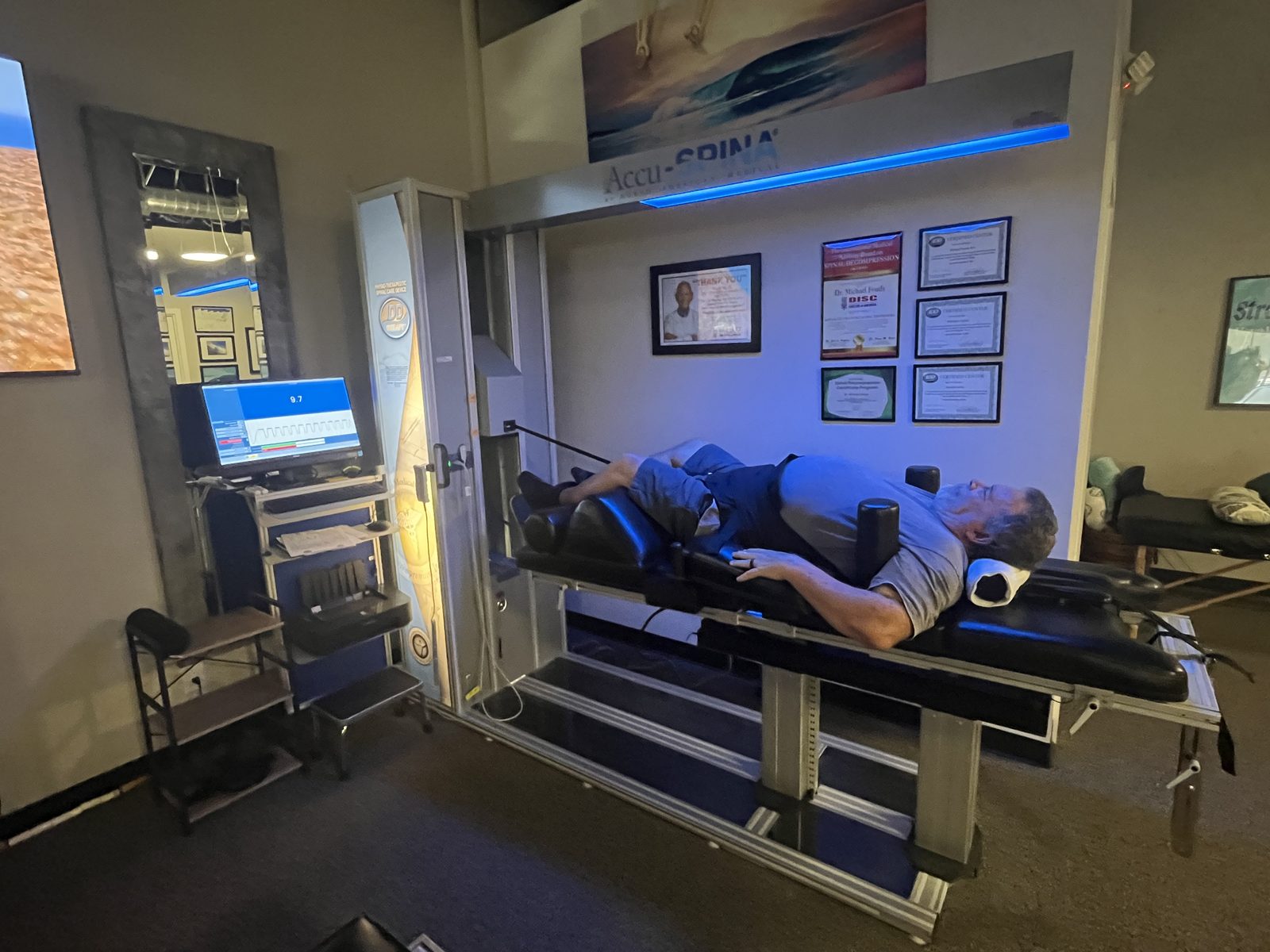
AccuSpina spinal decompression at Foudy Chiropractic in Mission Viejo is a non-surgical treatment that applies controlled negative pressure to a specific spinal disc, creating space that lets a bulge or herniation retract and relieving pressure on the nerve. What distinguishes the AccuSpina from other decompression tables is oscillation at maximum load: the disc is actively worked at the point of greatest decompression rather than simply held under traction. Dr. Michael Foudy, D.C. compared the two leading tables in person before choosing it. A course typically runs six to eight weeks, followed by a progress exam and a maintenance schedule, with corrective exercise beginning before the course ends.
Dr. Michael Foudy, D.C.
He chose the AccuSpina for two reasons. The published research behind it, and one patented mechanical detail: oscillation at maximum load. Most decompression tables pull and hold. This one pulls, holds, and moves - so the disc is worked at the exact moment it has the most space to respond.
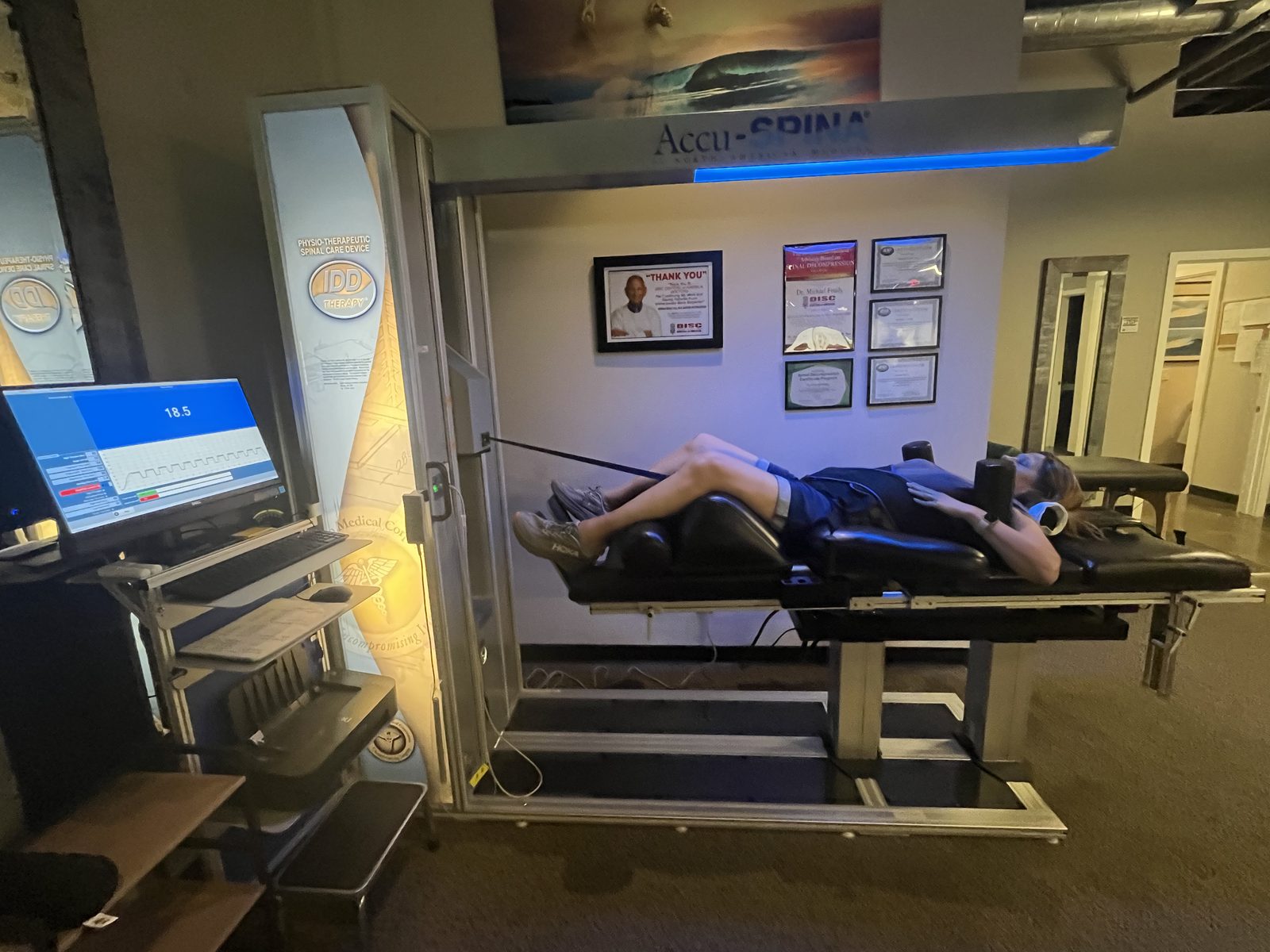
The Accu-SPINA® is the only device certified to deliver IDD Therapy® - Intervertebral Differential Dynamics - a computer-directed protocol that targets the specific damaged spinal segment rather than pulling on the whole spine. The clinician sets the treatment waveform, and the system layers on its patented secondary oscillation, the detail that separates it from ordinary traction.
The device itself is on permanent exhibit at the International Museum of Surgical Science in Chicago, archived alongside innovations like the Iron Lung and the artificial heart valve as equipment that changed how medicine is practiced.
Traction pulls the whole spine. Decompression isolates a level. Your exam and digital X-rays identify which disc is involved, and the table is set to that segment.
Controlled distraction lowers pressure inside the disc. That pressure differential is what allows a bulge or herniation to draw back in rather than press on the nerve.
The patented part. At peak decompression the table oscillates, working the disc while it has the most room. This is the feature Dr. Foudy flew across the country to test.
Discs have almost no direct blood supply and depend on movement to draw in fluid and nutrients. Decompression restores that exchange, and it is that rehydration that lets the disc itself heal - which is why it addresses the cause rather than the symptom.
| AccuSpina decompression | General traction | Spinal surgery | |
|---|---|---|---|
| What it targets | One identified disc level | The whole spine | The structure itself |
| Oscillation at load | Yes, patented | No | Not applicable |
| Invasive | No | No | Yes |
| Recovery time | None between visits | None | Weeks to months |
Surgery is the right answer for some findings. If yours is one of them, Dr. Foudy refers you to a surgeon rather than starting a course of care that will not help.
IDD Therapy® - the protocol this table delivers - has been studied in peer-reviewed journals for two decades. Three of the findings, with sources named so you can look them up yourself:
Patients with chronic low back pain were randomized to IDD Therapy or an exercise-based physical therapy program. The IDD group experienced roughly 20% greater pain relief.
415 patients were followed for up to two years after treatment, including 129 candidates for spine surgery. 92% of the surgical candidates were able to avoid surgery after a course of IDD Therapy.
Average pain scores fell from 6.88 before treatment to 2.42 at the last session - and kept improving to 1.65 a full year later, suggesting the correction holds.
These are studies of IDD Therapy as a protocol, compiled by the device manufacturer. They are not a guarantee of any individual outcome - which is why your own course of care starts and ends with a measured exam, not a statistic.
Whether you are a candidate is decided by your exam and your imaging, never by a phone call.
The disc's inner material pushes through its outer wall and contacts the nerve.
How this is treated →The disc wall distorts outward without rupturing, narrowing the nerve's exit.
How this is treated →Pain from the low back down the leg, most often from an L4, L5, or S1 compression.
How this is treated →The spinal canal narrows and crowds the cord or the nerve roots.
How this is treated →Disc height and hydration decline with age and load, reducing the space nerves need.
How this is treated →The small joints at the back of the spine become irritated and inflamed.
How this is treated →Nerve compression felt downstream in the leg, foot, arm, or hand.
How this is treated →Long-standing pain where imaging shows disc involvement or degeneration.
How this is treated →Surface EMG, digital X-rays, postural scales, and range of motion. Decompression is only recommended if your findings support it - you are told either way at the Report of Findings, before any commitment.
A structured course of visits on the AccuSpina, with your chiropractic adjustment bundled at a reduced rate for the duration. Visits run about 45 minutes; sessions are comfortable - most patients describe a slow stretch - and many notice a change within the first two weeks, though structural change takes the full course.
Melanie L. Foudy, M.S. starts the rehabilitation programme before the course ends, so the correction has something holding it in place when decompression stops.
Real re-testing against your original measurements, not a conversation. Then a maintenance schedule - the way braces hand off to a retainer.
“Most people describe it as a slow stretch. Some fall asleep on the table.”What patients say about decompression
Spinal decompression is a non-surgical treatment that applies controlled negative pressure to a specific spinal disc. That pressure change creates space, allowing a bulging or herniated disc to retract and relieving compression on the nerve. It is distinct from general traction, which pulls the whole spine rather than isolating a level.
Oscillation at maximum load. Most tables apply traction and hold it. The AccuSpina adds patented oscillation at the point of greatest decompression, so the disc is actively worked while it has the most space. Dr. Foudy tested the two leading tables side by side in Florida before choosing it.
No. Most patients describe it as a slow, comfortable stretch. Some fall asleep on the table. It is deliberately gentle - the point is to let the disc respond, not to force anything.
A course typically runs six to eight weeks. The exact number comes from your own exam and X-rays rather than a template, and you are told the timeline at the Report of Findings before you commit to anything.
A decompression plan is a full course of care on the AccuSpina, built around your own imaging, with your chiropractic adjustment bundled at a reduced rate for the duration. Because every plan is personal, Foudy Chiropractic quotes it in person after your examination. Coverage varies by plan and most patients pay cash - call (949) 365-0403 and Carmen can walk you through it and verify your benefits.
It is a non-surgical option that many patients try first. Whether it is appropriate depends on your imaging and your examination. If your findings genuinely belong with a surgeon, Dr. Foudy refers you to one - that answer comes at the beginning, not after ten visits.
Age is not the test. Candidacy comes from how long the pain has lasted, whether it travels into a limb, and what the X-ray shows about disc space and degeneration - which is exactly what the examination measures.
Fracture, tumour, severe osteoporosis, spinal instrumentation, and some post-surgical cases. This is exactly what the examination is for, and it is why decompression is never sold over the phone.
One examination - surface EMG, digital X-rays, and a straight answer about whether this table can help your disc. You are told either way before you commit to anything.